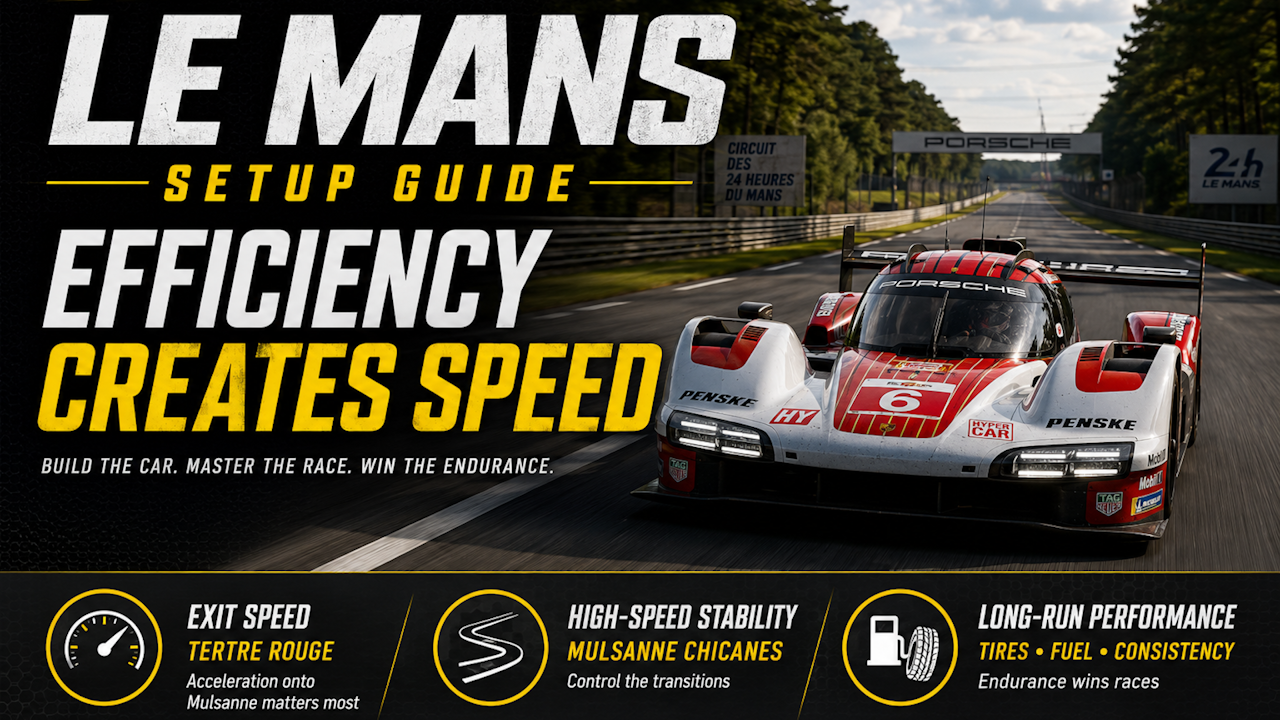
Circuit de la Sarthe (Le Mans) At 13.6 kilometers, Le Mans is nearly double the length of most permanent road courses, and that scale changes everything about how you build a setup. Tire degradation, fuel efficiency, braking stability, and long-run consistency matter far more here than at a sprint circuit. Don’t mistake endurance for slowness. […]
Category: Track guide
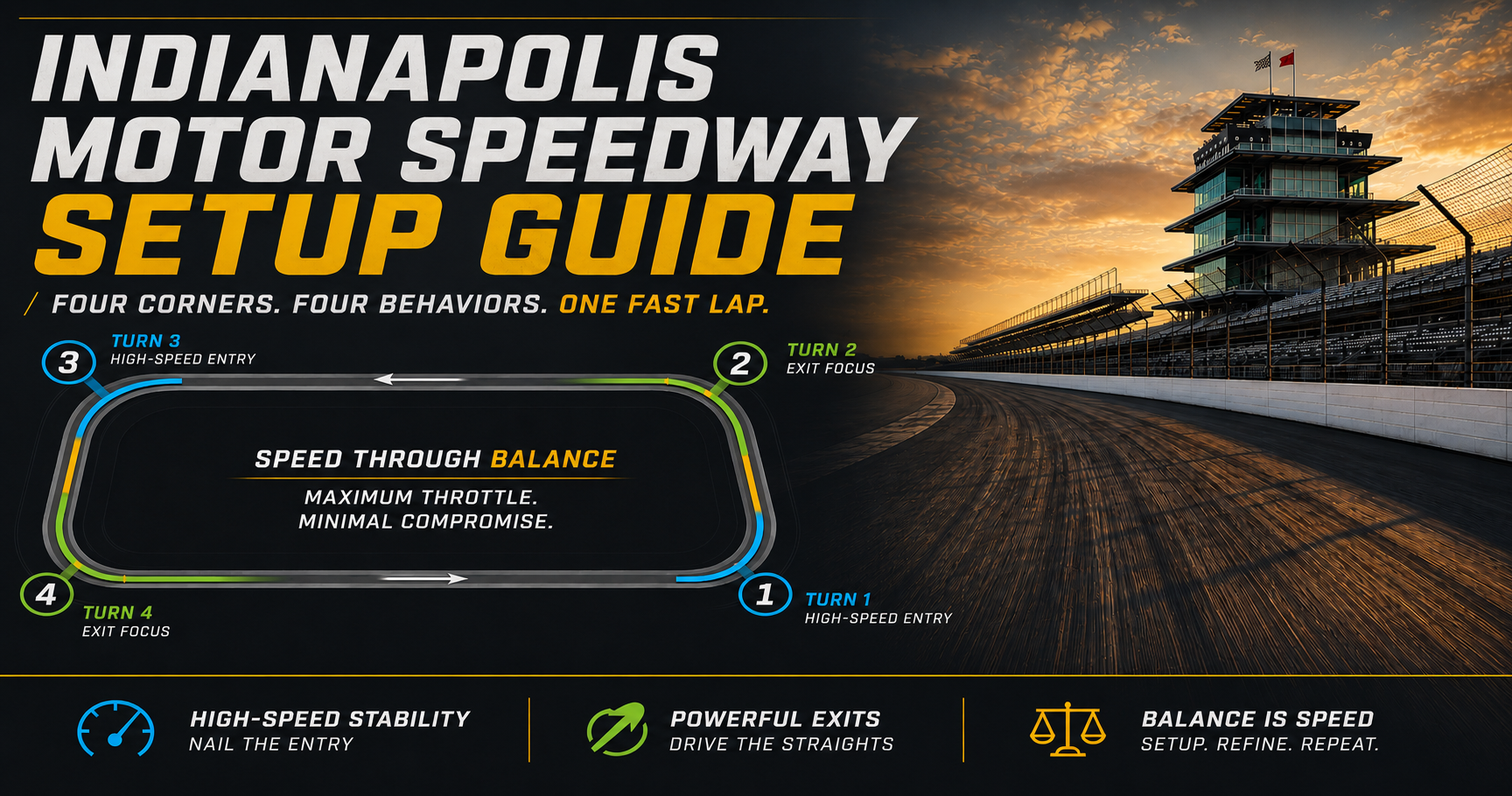
Indianapolis Motor Speedway setup guide
Indianapolis Track summary Indianapolis Motor Speedway is one of the most unique tracks in motorsport, not only because of its history, but because of its shape. It is commonly referred to as an oval, but in reality it is much closer to a rectangle, consisting of four straights and four 90-degree corners. At first glance, […]
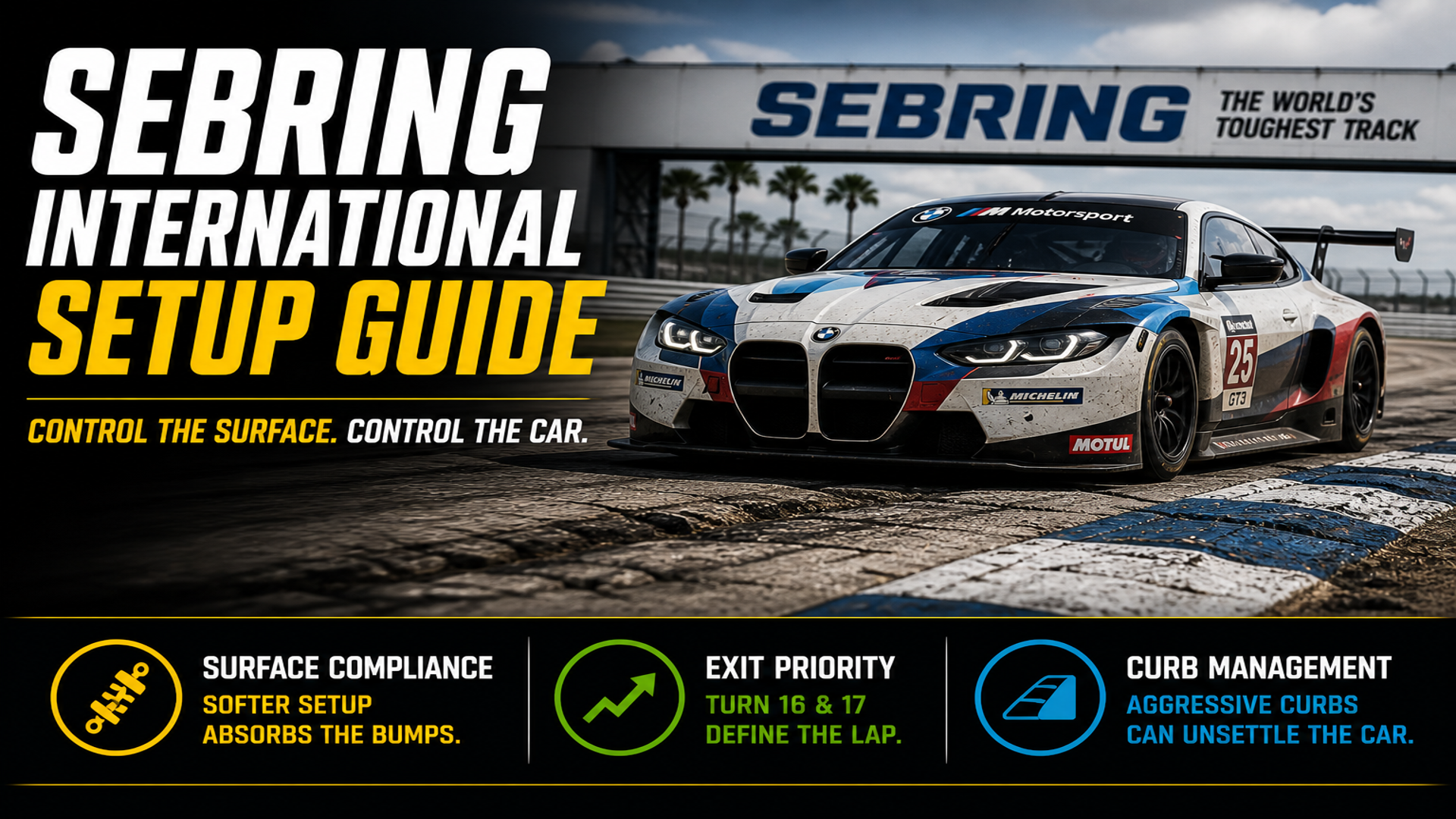
Sebring International Setup Guide
Sebring International Raceway is a fast, technical road course defined by one characteristic above all else: its surface. The track is notoriously bumpy, and those bumps fundamentally shape how the car must be set up. Unlike smooth circuits where stiffness and precision can be prioritized, Sebring demands a balance between control and compliance. The suspension […]
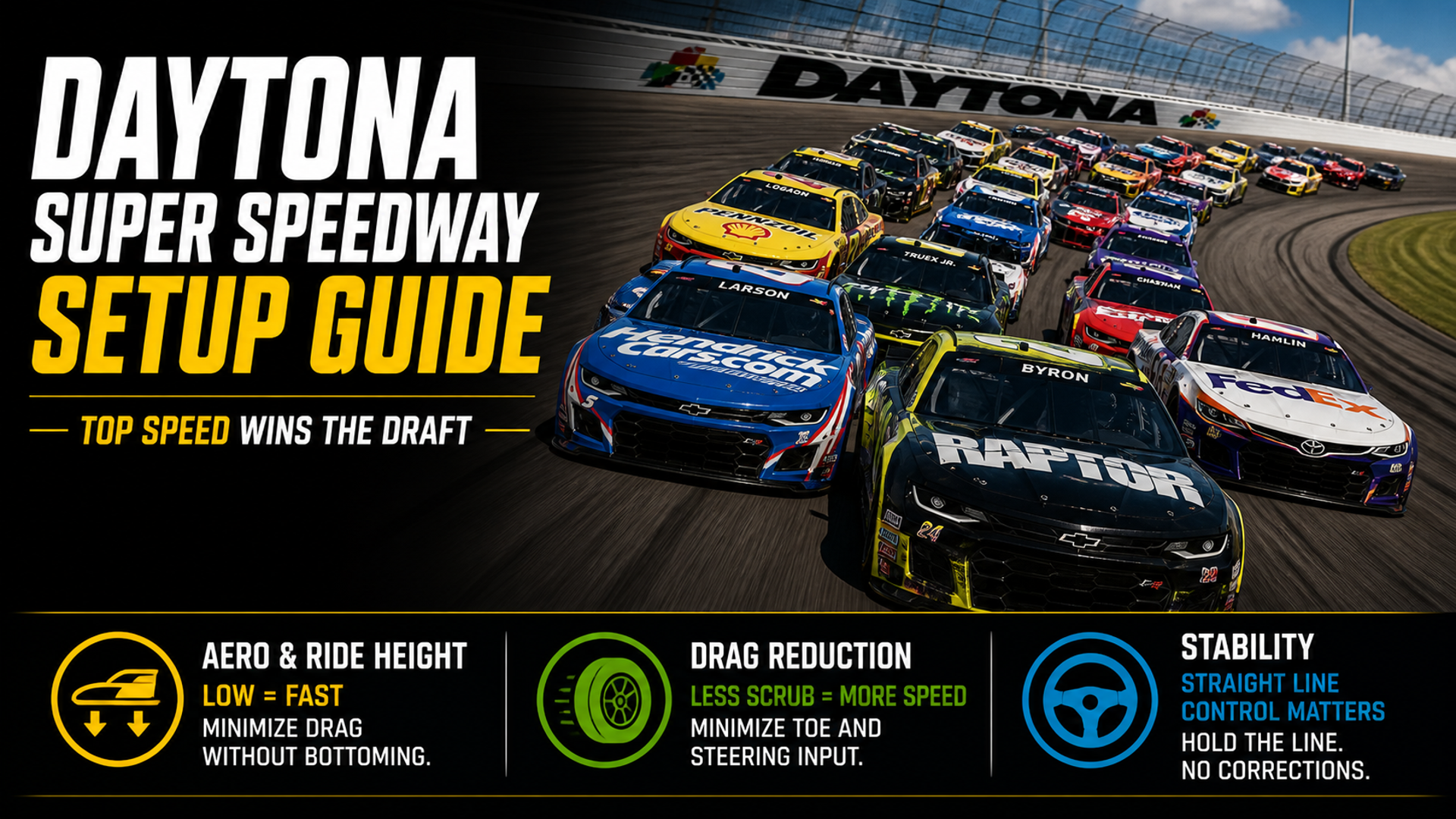
Daytona Superspeedway setup guide
Daytona 24 hour track setup guide
The road course configuration at Daytona International Speedway combines high-speed banking with technical infield sections, creating a setup challenge that blends two very different worlds. The car must be efficient and stable at speed on the oval, while still maintaining the grip and control needed to navigate slower, more technical corners. At a glance, this […]
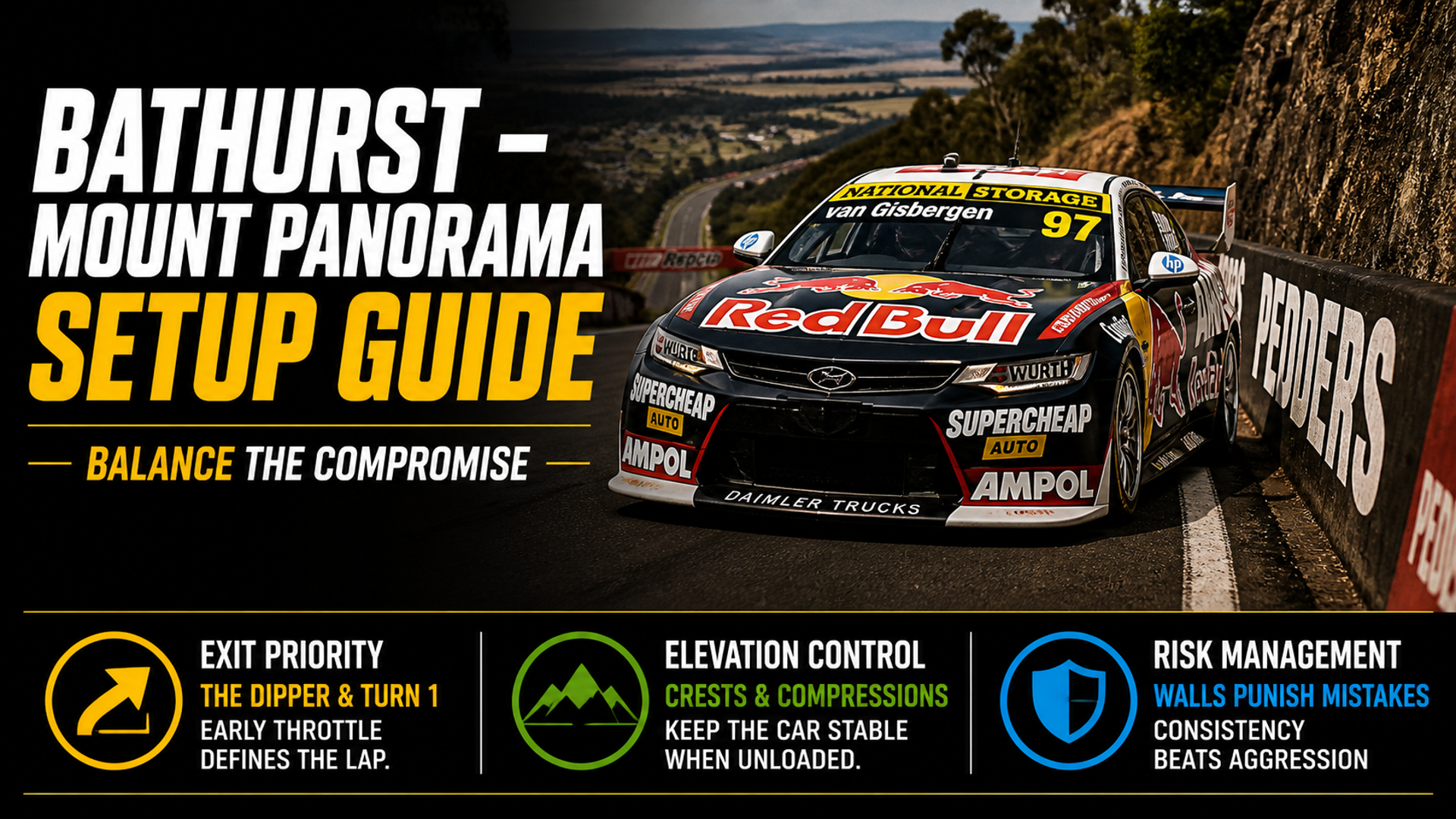
Bathurst – Mt Panorama setup guide
Mount Panorama Circuit is not a track to approach casually. It is long, fast, and unforgiving, with massive elevation changes, heavy braking zones, and walls that are always waiting for even the smallest mistake. The car is constantly being loaded, unloaded, and transitioned in ways that few other tracks demand. The only places where a […]